Why Late Fall and Winter Suit Many Tree Removals
If a tree needs to come down but is not an immediate hazard, scheduling the work for the dormant season often means less disturbance to the yard and a clearer view of the job.
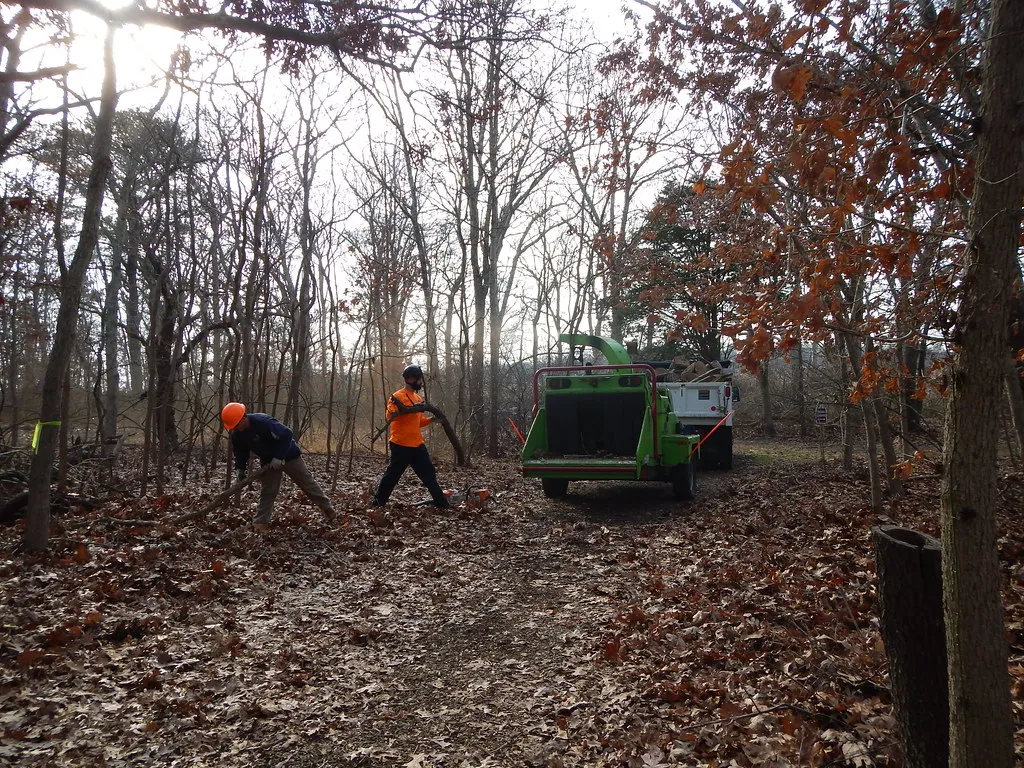
Some tree removals cannot wait: a tree split by a storm, a trunk with a fresh, dangerous crack, a dead tree leaning over the house. Many others are planned decisions. A tree that has been declining for a few years, an ash killed by emerald ash borer, a tree crowding a foundation, or one standing where a spring addition will go can all be scheduled. For those planned jobs, late fall and winter offer real advantages in the western suburbs, and fall is the time to get the work arranged.
Once the leaves drop, the crew can see the tree's entire structure: every limb, every union, every dead section, and every crack. That makes it easier to plan the order of cuts and how each piece will be lowered. A tree without leaves also weighs less and produces less debris, and limbs are easier to control without a full canopy catching the wind. For a tree near a roof or hanging over a fence, those details matter.
Soil conditions are a big part of the equation. When the ground freezes solid in winter, it can carry equipment with far less rutting in lawns and beds than soft autumn soil. Perennials, shrubs, and turf are dormant, so foot traffic and moving brush do less harm to plantings than they would in June. The honest caveat is that late fall in northern Illinois can also be wet, and saturated clay is easy to damage. Good crews watch conditions and adjust; sometimes waiting a week for a hard freeze or a dry spell is the better call.
Dead ash trees deserve a special mention. Many ash trees in DuPage County were killed by emerald ash borer, and dead ash wood becomes brittle as it dries. Over time the tree gets more dangerous to climb and less predictable to take down in sections. If there is a dead ash on your property that you have been meaning to deal with, this winter is a better time than a few years from now, and it should not be put off to the point where it becomes a hazard to the house, the street, or the people removing it.
Winter is also typically less hectic than storm season. Spring and summer storms create emergency work that can push planned jobs back, while booking a dormant-season removal in the fall gives you more choice of dates and time to prepare. Stump grinding and lawn repair may wait until the ground thaws, which is worth discussing up front so you know what the yard will look like in the meantime.
Whatever the season, get the scope in writing. Which trees are coming down? Will the stump be ground, and how deep? Will all wood and brush be hauled away, or will some logs be left for firewood? How will the crew reach the tree, and what protection will be used for the lawn, driveway, and plantings? Point out anything nearby that could be affected, such as a fence, sprinkler lines, a septic field, or a neighbor's structure.
Dormant-season timing is a convenience, not a rule. A tree with a new crack, a lean that is getting worse, soil lifting on one side of the trunk, or large broken limbs hanging in the canopy should be dealt with now. If you are not sure which category your tree falls into, have it assessed before deciding to wait.
Klein Creek Tree Care plans and performs safe, controlled removals for homes and businesses in Wheaton, Glen Ellyn, and surrounding communities, with optional stump grinding and complete debris cleanup. If you have a tree that needs to come down, request an estimate this fall and we can talk through the best timing for your property.
Planning a tree removal this winter?
Klein Creek Tree Care LLC provides controlled tree removal, stump grinding, and cleanup in Wheaton, Glen Ellyn, and surrounding communities.