What a Professional Tree Risk Assessment Covers
A risk assessment is not a guess about whether a tree looks scary. It is a structured look at how likely a tree or limb is to fail, what it could strike, and what can be done about it.
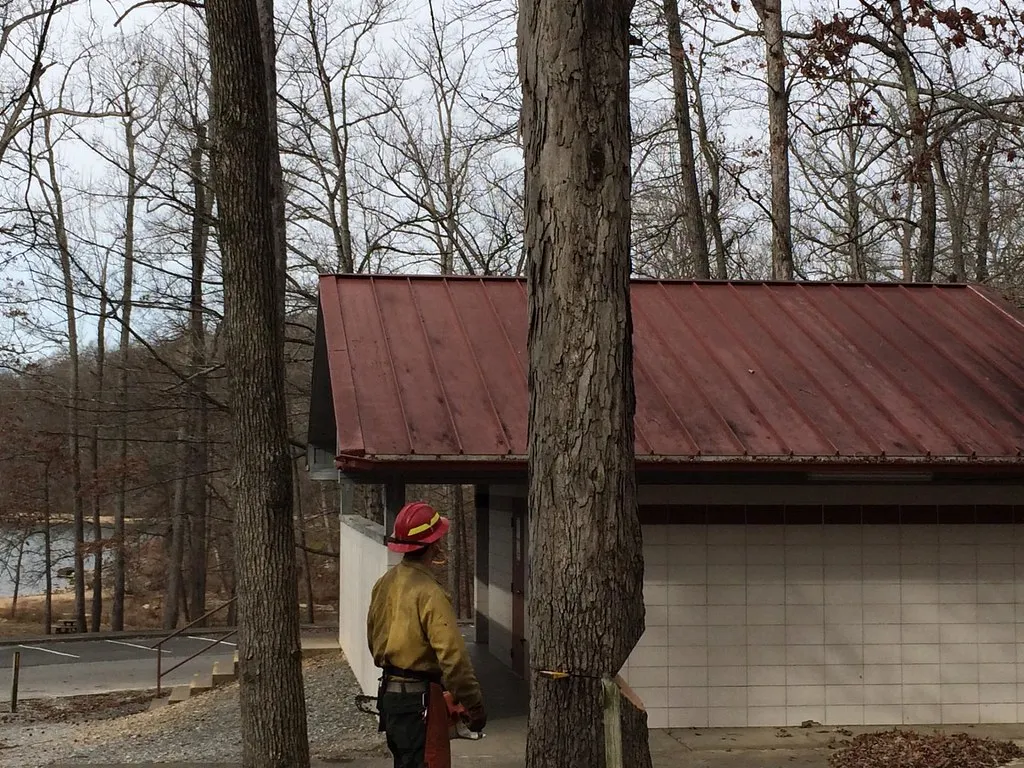
Large trees around homes, schools, parking lots, and common areas bring shade and value, and they also carry some level of risk. Most of the time that risk is low. Sometimes a tree has a defect that, combined with a house, a driveway, or a busy sidewalk below it, deserves attention before a storm makes the decision for you. A professional tree risk assessment is how an arborist tells the first situation from the second. Fall, before winter wind and snow, is a sensible time to schedule one for a tree you have been wondering about.
Every assessment comes back to three questions. How likely is the tree, or part of it, to fail within a given time frame? If it fails, how likely is it to hit something? And if it hits something, how serious would the consequences be? A dead limb over an unused corner of a large lot is a very different situation from the same limb above a swing set or a bedroom. Separating the condition of the tree from what sits underneath it is what makes the result useful.
The arborist looks at the site first: slope, soil, drainage, recent construction, wind exposure, and everything within reach of the tree if it or a large limb came down. Then the tree itself is examined from the ground up. At the base, signs of root decay, girdling roots, heaving soil, or mushrooms are noted. On the trunk, the arborist looks for cracks, cavities, cankers, seams, bulges, and missing bark. In the crown, attention goes to dead or broken limbs, weak unions, included bark, overextended branches, and the overall balance of the canopy. Species matters as well, since some trees are known for brittle wood or for particular ways of failing.
Industry practice describes three levels of assessment. A limited visual assessment is a quick look, often used to scan many trees and pick out the ones that need closer attention. A basic assessment is a detailed ground-level inspection of an individual tree, walking all the way around it and using simple tools such as a mallet to sound the trunk, a probe, and binoculars for the upper crown. An advanced assessment adds specialized work when a basic inspection raises questions it cannot answer, such as testing to estimate how much sound wood surrounds internal decay, inspecting high defects from a lift or by climbing, or carefully excavating soil to look at buried roots. Most residential questions are answered at the basic level.
The result should be specific. Expect a description of the defects found, an overall risk rating, and mitigation options with an explanation of what each one changes. Options can include removing dead wood, shortening a heavy limb, installing a cable, moving a target such as a picnic table or where cars are parked, monitoring the tree on a schedule, or removing it. Every option leaves some remaining risk, and a good report says so. It should also suggest when the tree ought to be looked at again.
Common reasons to request an assessment include a tree that leans more than it used to, a crack or cavity you have noticed, mushrooms at the base, a large dead branch, damage from a recent storm, or construction that disturbed the roots. Assessments are also useful before buying a home with large trees, for HOAs and property managers deciding where to spend a limited budget, and when neighbors disagree about a tree near the property line. Share whatever history you have: when the tree was planted, past work on it, storm damage, and changes to the yard.
No assessment can promise that a tree will not fail. Trees are living structures in an unpredictable environment, and extreme weather can break sound trees. What an assessment does is replace uncertainty with an informed judgment, so you can choose a course of action with a clear sense of the trade-offs. Often the conclusion is reassuring: the tree is in reasonable shape and needs only routine care.
At Klein Creek Tree Care, tree risk assessments are performed by an ISA Certified Arborist for homes, businesses, HOAs, and municipal properties in Wheaton, Glen Ellyn, and surrounding communities. If there is a tree on your property you have been keeping an eye on, schedule an assessment before winter and get a straight answer about what it needs.
Have a tree you keep worrying about?
Klein Creek Tree Care LLC provides tree risk assessments by an ISA Certified Arborist for properties in Wheaton, Glen Ellyn, and surrounding communities.