Spongy Moth Egg Masses: Find and Remove Them While the Trees Are Bare
Tan, fuzzy patches on bark and fences can each hold hundreds of spongy moth eggs. With the leaves down, late fall and winter are the easiest time to find and destroy them.
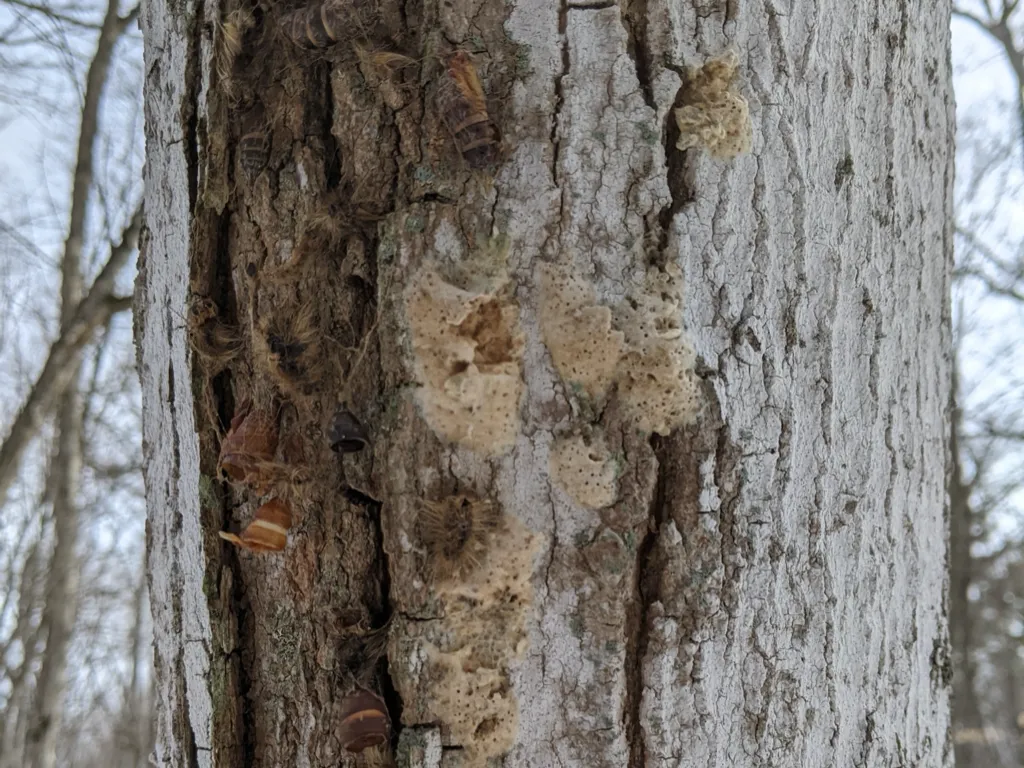
Spongy moth, the insect long known as the gypsy moth, is present in northeastern Illinois. Its caterpillars hatch in spring and feed on the leaves of oaks and many other trees, and in years when their numbers build up they can strip large parts of a canopy by early summer. The insect spends the winter as eggs, and with the leaves down, November is a good time to look for them around your property.
Egg masses are easy to miss until you know what to look for. Each one is a tan or buff, fuzzy patch, usually oval and about the size of a quarter or a little larger, covered with hairs from the female moth. A single mass can hold several hundred eggs. Masses laid this past summer look firm and fuzzy. Old masses from earlier years look faded and flattened, with tiny holes where the caterpillars already hatched, and those no longer need attention.
Start with the trunks and the undersides of larger branches on oaks and other shade trees, especially in bark crevices and on the sheltered side. The moths also lay eggs on surfaces that are not trees at all: fences, the underside of decks and outdoor furniture, firewood stacks, birdhouses, play sets, trailers, and the eaves of sheds. Check anything that stays outdoors and has a protected spot.
Removing them is simple. Scrape each mass off with a putty knife or an old plastic card into a container of soapy water, let it soak for a couple of days, and then throw it away. Scraping masses onto the ground does not kill the eggs, and many will still hatch in spring. Wear gloves, since the hairs bother some people's skin. Leave masses that are too high to reach from the ground; a ladder against a tree trunk in cold weather is not worth the risk.
Egg masses also travel. Firewood, outdoor furniture, and camping gear can carry them to new areas, so check those items before moving them any distance, whether you are heading to a cabin or moving to a new home.
Any masses you miss will hatch in spring, around the time oak buds open. The young caterpillars are tiny and dark, and many hang from silk threads and drift on the wind to nearby trees. Older caterpillars are hairy, with pairs of blue and red dots along their backs, and they feed through late spring and early summer. Make a note of which trees had the most egg masses this winter, since those are the ones to watch when the leaves come out.
Scraping makes the most difference on a handful of yard trees. If you find dozens of masses on one tree, or your oaks lost a large share of their leaves this past summer, have an arborist look at the trees before spring. Healthy trees usually leaf out again after one year of heavy feeding, but repeated defoliation, especially on top of drought or other stress, can weaken them over time.
Klein Creek Tree Care provides tree health assessments for homeowners in Wheaton, Glen Ellyn, and surrounding communities. If you are finding egg masses on your oaks, or your trees looked thin this summer, request an estimate and we can look at the trees with you and talk through what to watch for next spring.
Finding egg masses on your trees?
Klein Creek Tree Care LLC provides tree health assessments and pruning in Wheaton, Glen Ellyn, and surrounding communities.