Protecting Young Trees From Deer and Rabbits This Winter
A young tree can make it through a dry summer and still be lost over one winter to animals chewing or rubbing its bark. Fall is when protection should go on.
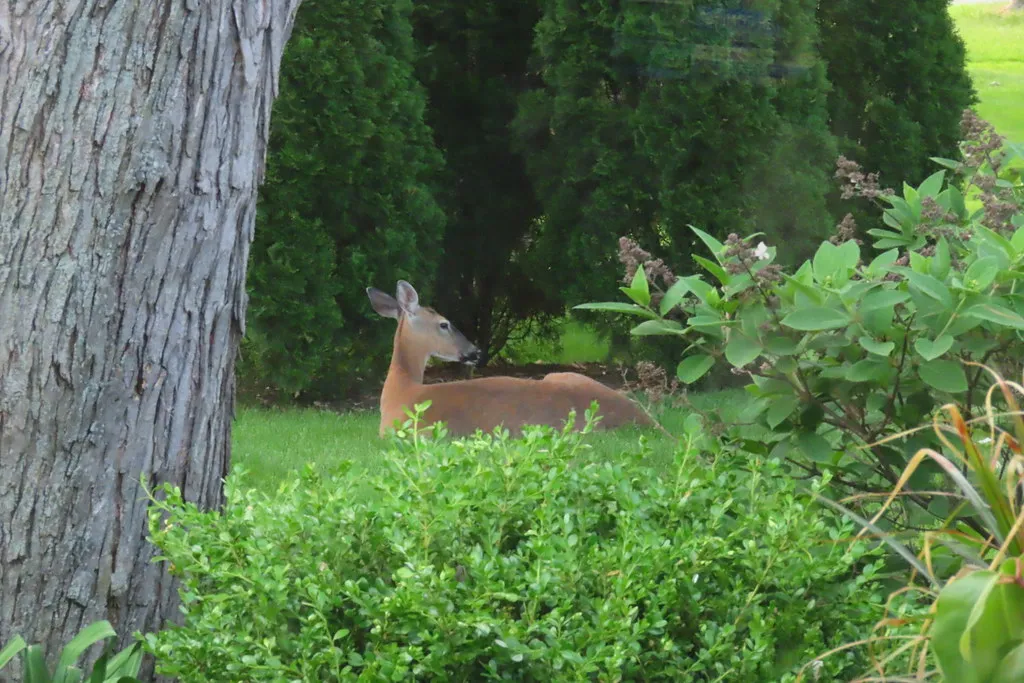
Neighborhoods around Wheaton and Glen Ellyn share space with plenty of wildlife, especially near forest preserves, creeks, and open land. Most of the year that is part of the appeal. In late fall and winter, though, deer, rabbits, and voles turn to woody plants for food, and in the case of deer, for something to rub against. Young trees with thin bark are the most vulnerable, and the damage can be serious enough to kill a tree that would otherwise have thrived.
Rabbits chew bark and small stems once green food becomes scarce. Their damage usually appears near the base of the trunk, but snow raises them up, so after a deep snowfall they can strip bark well above where they could normally reach. Look for bark removed in patches with fine tooth marks, and small shoots clipped off cleanly at an angle. Fruit trees, serviceberries, redbuds, young maples, and many ornamentals are common targets.
Voles do much of their damage out of sight. They tunnel through grass and under snow and mulch, chewing the bark around the base of trunks and on exposed roots. Because the feeding often happens under a blanket of snow or a deep layer of mulch, it may not be found until spring, when a tree fails to leaf out, or leafs out and then collapses. Keeping mulch a few inches away from the trunk and at a modest depth gives voles less cover right where the bark is thinnest.
Deer cause two kinds of damage. Browsing removes buds and branch tips, which can stunt and misshape young trees over several winters. Rubbing is often worse for an individual tree: in the fall, bucks rub their antlers against small trunks and shred the bark, sometimes most of the way around. Rubbing usually happens on trunks a few inches across, from roughly knee to waist height, and a tree that loses bark around most of its trunk may not survive.
Physical barriers are the most reliable protection. For rabbits and voles, a cylinder of hardware cloth around the trunk works well; set the bottom slightly into the soil, leave space between the mesh and the bark, and make it tall enough to stay above the depth of a heavy snow. For deer rubbing, a wider cage of sturdy fencing held with stakes keeps antlers off the trunk, and to stop browsing it needs to be tall enough that deer cannot reach over it to the main branches. Plastic spiral guards are common, but they can trap moisture and shelter insects against the bark, so take them off in spring rather than leaving them on year-round. Repellents can reduce browsing, but they wear off, need reapplying, and a hungry animal may ignore them.
Get protection in place before the first heavy snow, and check it a few times over the winter, especially after storms. Guards can be pushed over, buried, or knocked loose, and drifts can give rabbits a step up over the top. Loosen or resize any guard as the tree grows so it never binds the trunk.
If you find damage, look at how much of the trunk's circumference is affected. A healthy tree that has lost bark on part of the trunk can often close the wound over time; avoid painting or sealing it. Bark removed all the way around usually means the tree above the damage will die, though some species can resprout from below. A tree with a browsed or clipped leader may need corrective pruning in a year or two to restore a single strong leader.
Animal damage on a young tree is easier to manage when it is caught early. If deer, rabbits, or voles have already been at your trees, or you are planting this fall and want protection planned from the start, Klein Creek Tree Care can evaluate the trees and recommend next steps for properties in Wheaton, Glen Ellyn, and nearby communities.
Young trees in a deer-heavy neighborhood?
Klein Creek Tree Care LLC plants and cares for young trees on properties in Wheaton, Glen Ellyn, and surrounding communities.