Early Fall Color in Wheaton: When Leaves Turn Too Soon
Autumn color that shows up weeks ahead of the neighborhood, or only on one side of a tree, is often worth a closer look before the leaves drop.
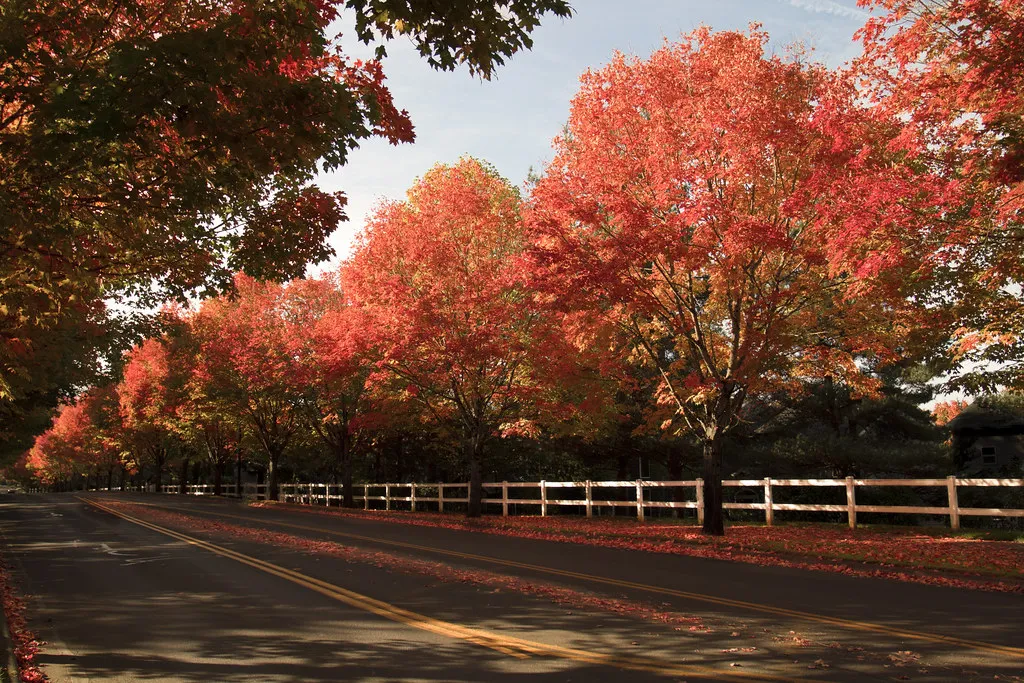
Most shade trees around Wheaton and Glen Ellyn hold their green well into autumn, with maples, ashes, and oaks reaching full color in October as nights cool and days shorten. That is why a tree that flushes red or yellow in mid-September stands out. Sometimes it is simply the species or the cultivar doing what it always does. Often, though, early color is a stress signal. A tree that is struggling to move water or keep its leaves supplied can close out its season early, and the pattern of that early color says a lot about where the trouble is.
Fall color appears when a tree stops producing chlorophyll. As the green fades, the yellow and orange pigments that were there all summer show through, and some species also produce reds. Healthy trees time this to shorter days and cooler nights. A stressed tree can start the process early because it cannot support all of its leaves. Drought, a damaged or crowded root system, injury to the trunk, and some diseases all reduce how much water and sugar move between the roots and the canopy. When that flow is restricted, the tree may begin shutting down the branches it can least afford to feed.
Where the color appears matters more than the color itself. A whole tree turning a little early after a dry stretch is a different situation from one limb blazing red while the rest of the crown stays green. Color limited to one side often lines up with something on that side of the tree: a new driveway, a trench for a utility line, a patio, soil compacted by parked equipment, or a root wrapped around the base. Early color at the top of the crown or at the tips of scattered branches can point to a root system that is not keeping up. A single branch turning early may have a canker, a crack, or insect damage somewhere below the colored leaves.
A short walk around the tree answers several questions. Look at the base first. The trunk should flare outward where it meets the soil; if it goes straight into the ground like a fence post, the root flare may be buried under soil or mulch, which can hide roots circling the trunk. Check the bark at mower and string-trimmer height for wounds. Think back to whether the canopy looked thinner this summer, or whether leaves were smaller than usual or scorched at the edges. Note any changes under the canopy in the last few years, even small ones such as regrading a bed or adding a raised garden. Photos taken now are useful later, because they let you compare next fall's timing with this year's.
A few causes show up again and again in this area. Maples planted in lawns are prone to stem-girdling roots, which slowly squeeze the trunk and often cause early color and dieback on one side. Heavy clay soils compact easily, and compaction cuts off the oxygen and water roots need. Trees near recent construction may be reacting to root loss from a season or two earlier, since construction damage often takes time to show. Late-summer dry spells add up as well, particularly for trees in lawns watered lightly and often, which keeps moisture near the surface instead of down where tree roots can use it.
One early autumn does not mean a tree is failing. Trees have bad years and recover, especially when the cause was a temporary dry spell, and young trees planted in the last year or two commonly show some stress color while they establish. Some trees also color early by nature. The concern grows when early color repeats year after year, when it comes with thinning, dead twigs, or bark problems, or when it shows up on a large tree close to the house, the driveway, or a play area. In those cases, waiting for the tree to make its condition obvious usually narrows the options.
If a tree's color is out of step with the neighborhood, an evaluation in early fall, while the leaves are still on, lets an arborist see the full pattern. Klein Creek Tree Care evaluates tree health for homeowners in Wheaton, Glen Ellyn, and nearby communities, and can check the root flare, trunk, and crown and explain what is most likely driving the early color. The answer might be as simple as deep watering before the ground freezes or correcting buried roots, or it might be a structural concern worth addressing before winter weather. Either way, you will know what the color is telling you.
Tree changing color too early?
Klein Creek Tree Care LLC provides tree health evaluations for properties in Wheaton, Glen Ellyn, and surrounding communities.