Buckthorn Stays Green in November: Find It Now and Plan Its Removal
When most of the yard has gone bare, the small trees still holding green leaves along the fence line are often buckthorn. That makes November the easiest month to find it.
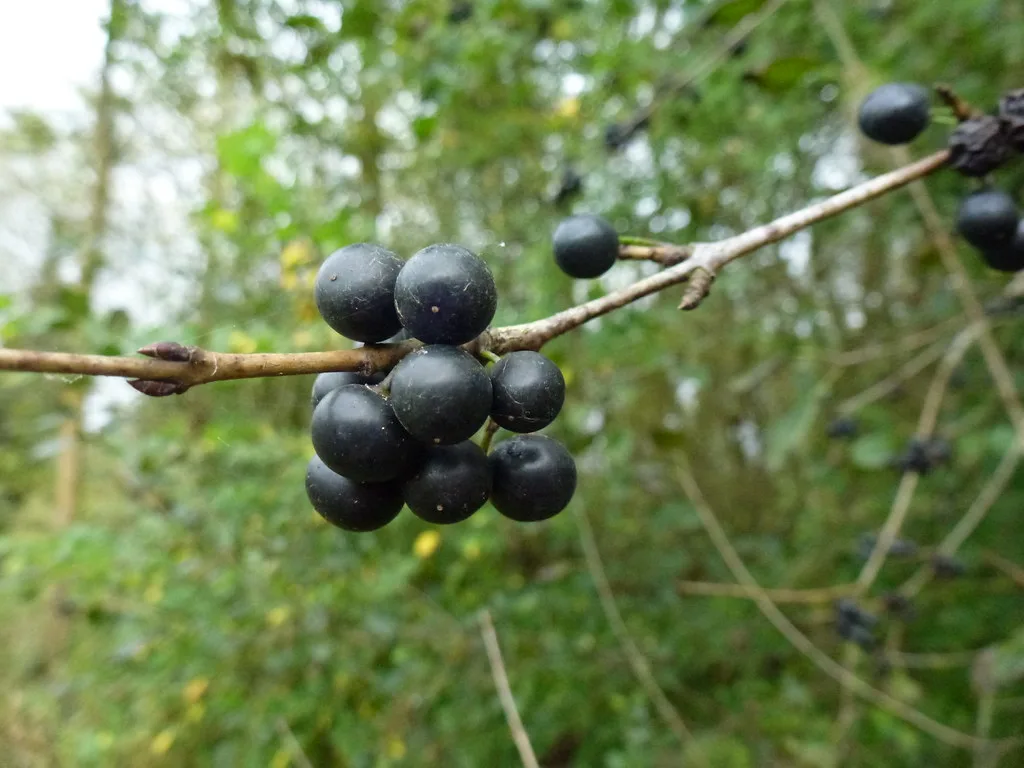
Walk the edge of almost any wooded lot in DuPage County in November and you will see a layer of small trees and shrubs that are still green while the oaks, maples, and native shrubs around them have dropped their leaves. Much of that green is common buckthorn, an invasive plant brought over from Europe for hedges. It is one of the most widespread invasive plants in northern Illinois, and it is very likely growing somewhere on or next to your property.
Buckthorn leafs out early in spring and holds its leaves late into fall, so it shades out the native plants and young trees beneath it for weeks longer than they can handle. Over time it forms dense thickets that crowd out everything else. Birds eat the berries and spread the seeds, which is why new seedlings keep appearing in fence lines, hedges, and garden beds. The berries act as a strong laxative on the birds that eat them, which spreads the seeds even faster. A few shrubs in a back corner can become a thicket within a few years.
Common buckthorn has oval, finely toothed leaves with veins that curve toward the leaf tip. The leaves stay green well into November. Female plants carry clusters of small black berries that hang on into winter. Many twigs end in a short, sharp thorn. If you scrape the bark of a branch, the inner bark is yellow, and the heartwood of a cut stem is orange to pinkish.
Some native plants, including wild plum, chokecherry, and dogwoods, can look similar at a glance. Check several of these features before you cut anything, and if you are not sure, take photos or have someone who knows trees look first. Removing a native shrub by mistake is a common and avoidable loss.
Late fall and winter suit buckthorn work for several reasons. The plants are easy to pick out once everything else is bare. Native plants nearby are dormant, so trampling and dragging brush does them less harm. Frozen ground can carry equipment with less damage to lawns. Birds have also finished nesting, so clearing brush will not disturb active nests.
Small seedlings can be pulled by hand when the soil is moist, as long as you get the roots. Larger stems have to be cut, and that is where many homeowners get frustrated. A cut buckthorn stump sends up a cluster of new shoots the following season, often thicker than before. That is why cut stumps are usually treated right away with an herbicide labeled for that use, applied exactly as the label directs, or ground out and then watched for sprouts. Wear gloves and eye protection, since the thorny twigs whip back when cut.
Plan for follow-up. Buckthorn seeds already in the soil keep sprouting for several years after the parent plants are gone, so walk the area each spring and pull seedlings while they are small. Replanting cleared ground with native shrubs or trees helps keep buckthorn from simply filling the space back in.
A buckthorn thicket along a property line is a bigger job than most people want to take on with a hand saw. Klein Creek Tree Care provides tree removal, lot clearing, and stump grinding for properties in Wheaton, Glen Ellyn, and surrounding communities. If you have spotted buckthorn this fall, request an estimate and we can talk through clearing it before spring.
Clearing buckthorn from your property?
Klein Creek Tree Care LLC handles tree removal, lot clearing, and stump grinding in Wheaton, Glen Ellyn, and surrounding communities.